

The Importance of Physical Therapy in Rotator Cuff Tear Treatment
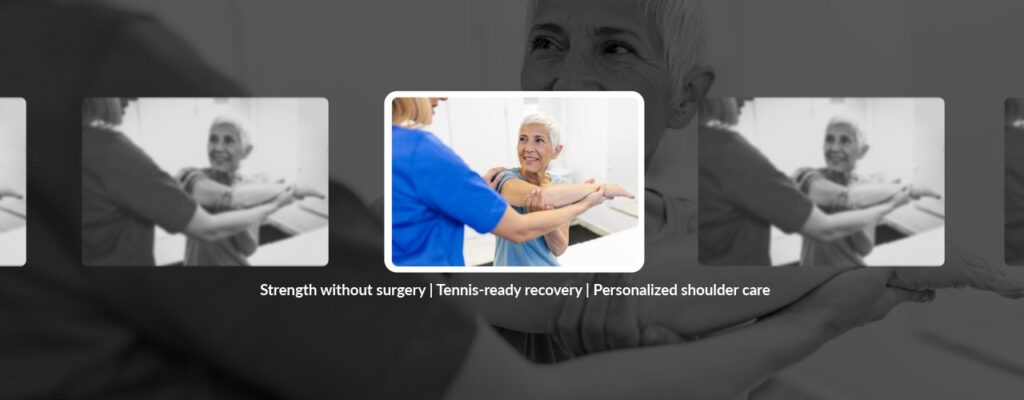
When Julie (not her real name) first came to Full Potential Physical Therapy, she had been struggling with shoulder pain that would not go away. An MRI confirmed a partial tear in her rotator cuff. She was hesitant about surgery and unsure of what her next steps should be. Like many patients exploring rotator cuff tear treatment, Julie was looking for a solution that would reduce pain, restore her function, and help her avoid invasive procedures.
Her journey with physical therapy turned uncertainty into confidence and provided the relief and progress she hoped for.
Limited Movement and Daily Frustration: How Shoulder Pain Affected Julie’s Life
Julie, a 56-year-old recreational tennis player, began experiencing nagging shoulder pain after a fall. At first, she thought it was a minor strain and tried to manage it with rest and ice. But after weeks of discomfort and difficulty lifting her arm, she sought medical advice. Imaging confirmed a partial rotator cuff tear in her dominant shoulder.
Her symptoms included:
- Sharp pain when reaching overhead
- Weakness while lifting or carrying objects
- Trouble sleeping on the affected side
- Pain while getting dressed or brushing her hair
- Decreased range of motion and strength
Julie was discouraged and worried she might need surgery. Her physician referred her to Full Potential Physical Therapy for conservative care as a first step in rotator cuff tear treatment.
Targeted Rotator Cuff Treatment That Addressed the Root Cause
At Full Potential Physical Therapy, Julie began with a comprehensive evaluation. Her physical therapist assessed her posture, shoulder mobility, muscle activation, and scapular control. The goal was not only to treat her symptoms, but also to understand why the injury was impacting her movement so significantly.
Her customized physical therapy program included:
- Manual therapy to reduce tightness in the shoulder joint and surrounding muscles
- Postural training to improve shoulder blade positioning and reduce strain
- Rotator cuff and scapular strengthening using resistance bands and light weights
- Mobility exercises to restore the range of motion without stressing the tear
- Neuromuscular re-education to correct movement patterns
- Education on activity modifications to prevent further irritation
Her sessions were progressive, and she gradually introduced more challenging exercises as pain decreased and strength improved. Throughout her care, the team at Full Potential Physical Therapy monitored her response closely and adjusted the plan as needed.
Rotator Cuff Tear Treatment: Tracking Progress Week by Week
Julie’s recovery was gradual but consistent. In the early weeks, her focus was on controlling pain and restoring range of motion. Her therapist used manual techniques and guided movements to help her feel more comfortable during daily activities.
Within a few sessions, she could reach overhead with less pain and was completing basic tasks without assistance. With consistent therapy, her shoulder strength had improved enough to allow her to carry groceries and sleep on her side again.
In the final weeks of therapy, Julie was doing advanced exercises that mimicked her tennis swing and other recreational activities. Her therapist made sure her shoulder could handle real-life movements with strength and control.
Key improvements included:
- Full return of active shoulder range of motion
- Significant reduction in pain during overhead tasks
- Improved scapular control and posture
- Increased muscle strength on manual testing
- Ability to return to recreational tennis without pain
Julie completed her physical therapy program and chose to continue her home exercises to maintain her progress.
No Surgery, No Problem: The Power of Conservative Care
Julie’s story shows how effective conservative care can be. While not all rotator cuff injuries can avoid surgical intervention, many partial tears respond well to physical therapy when addressed early. With targeted guidance and consistent effort, Julie avoided surgery and regained full function.
For patients with similar injuries, physical therapy offers:
- A non-invasive, personalized approach
- Pain relief through manual and movement-based techniques
- Improved strength, mobility, and posture
- Education on injury prevention and safe return to activity
If you are exploring rotator cuff tear treatment and wondering whether physical therapy is right for you, Julie’s success is proof that it can be both effective and empowering.
Start Your Comeback with Full Potential Physical Therapy
Rotator cuff injuries can limit your life in frustrating ways. You do not have to face the pain or recovery process alone. At Full Potential Physical Therapy, we provide expert care that focuses on your goals and your long-term health. Whether you are trying to avoid surgery or recover after one, we will help you move better and feel stronger.
Contact Full Potential Physical Therapy today to schedule your evaluation and take the first step toward lasting shoulder relief.