


Should I Get My Knee Replaced?
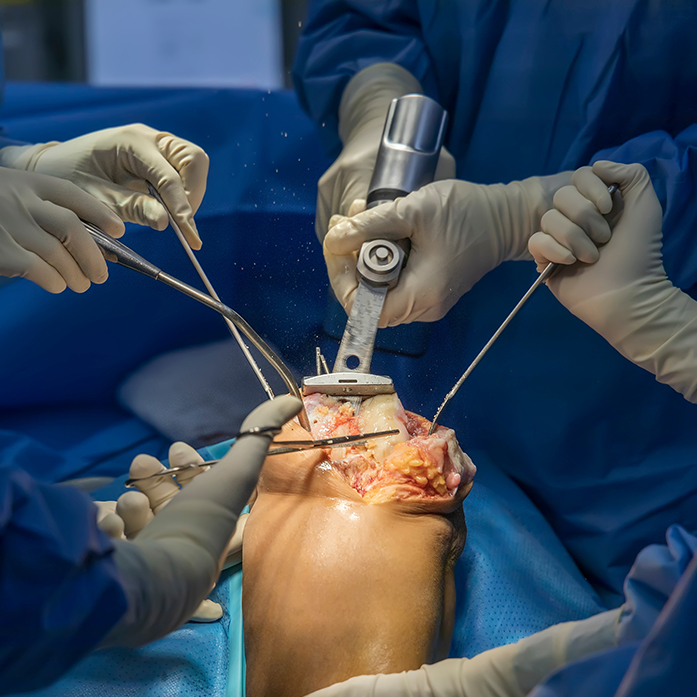
The decision to get a knee replacement can be a tricky one. There are a lot of factors that need to be considered in order to make the best choice. Below is a list of just a few. This is by no means an exhaustive list, but it gives some examples of the variables that can go into a complex decision to have a knee replacement or not.
• Chronicity of the issue (How long has there been a problem?)
• Age of the one getting the replacement
• Amount of arthritic change or tissue damage
• Level of your general function
• Experience of pain
• Medical history or current health status
• OTHER OPTIONS TRIALED
• Timing of potential procedure
• Barriers to rehabilitation or recovery
While I can’t help with many of these variables, a physical therapist can provide important information/help with 1 particular variable: OTHER OPTIONS TRIALED. Knee replacement should be a last case resort after other options have been explored. There is always risk associated with any surgical procedure and knee replacement is no exception. There is also a long healing process associated with the recovery from a replacement. Bony healing alone takes on average up to a year following this procedure and there are also other soft-tissues like muscles/tendons/ligaments that will need to recover. More conservative options should be exhausted prior to seeking out surgical intervention. These options can include injections, medications, weight loss and general health promotion, exercise for knee health, and/or physical therapy.
Evidence is mounting that physical therapy can be a means to reducing pain, improving function, improving strength/mobility, and even promoting some healing in arthritic knees. Physical therapists are trained to take a detailed history of the issue, perform in depth examination, and formulate an individualized plan based on your specific needs. This avenue for intervention can help address a lot of the variables that go into the decision to get a knee replacement or not, ideally making that difficult decision a lot easier.
If you are considering knee replacement or see it as an “inevitable” feature of your future, I advise you to try physical therapy. In my estimation, there is little to lose from trying. It may make the decision to undergo a knee replacement a moot point! This would be the ideal situation and I’ve seen it happen many times. If ultimately a knee replacement is needed, you will be more confident in that decision, you will have promoted strength and range of motion that can improve the ease of your recovery, and you may learn tips on when to push or when to back off to reduce your pain prior to your procedure. If you have more questions about whether to pursue physical therapy due to knee issues, please do not hesitate to reach out. Full Potential offers free consultations to discuss your concerns and help to formulate a plan specific to your needs.
What Should I Expect After a Knee Replacement?
Getting a knee replacement can be an intimidating proposition. A lot of the fear or anxiety related to this procedure comes from the unknown. It is true that there can be a lot of variety in how an individual recovers following a knee replacement. In general the most talked about outcomes are what I term the MIRACLE stories and the HORROR stories. The miracle stories sound a little like, “The surgery was a breeze, I had no complications, I flew through physical therapy and I was back on the golf course golfing the best round of my life within 4 weeks!” The horror stories sound a little different, with people saying, “This was the worst decision I’ve ever made. I had an infection, physical therapy was brutal, the surgeon had to go back in and move my knee for me to get my range of motion, and now it has been a year and I still feel like I’m worse than when I started!” Although I have heard these two types of stories, they are the rare exception and I don’t expect either to happen.
Much more often, the outcomes following a knee replacement follow a more predictable trajectory. The timeline looks a little like the chart below.

Average knee replacement timeline
1-2 days after surgery
Feeling “out of it” as you recover from surgery.
4-5 days after surgery
Start outpatient physical therapy, usually pretty painful and probably more-so than before surgery (you have a lot of healing going on!)
2-3 Weeks after surgery
Regaining range of motion/strength and walking without an assistive device. Still sore and swollen. Likely not yet sleeping great.
2-3 Months after surgery
PT is wrapping up and you will feel like you are getting back to function (walking pretty smooth, in/out of chairs, going up/down stairs again), but not fully better.
6-8 Months after surgery
Really happy you had your knee replaced and getting back to things you had been dreaming of before surgery (hiking, pickleball, exercise that challenges your knee).
1 Year after surgery
Vast majority of healing has by now occurred and you are thrilled with your results.

Welcome Amy
Amy serves Full Potential as a Patient Care Coordinator where she focuses her attention on assisting each of our patients with their scheduling needs. Amy ensures our patients receive prompt attention, welcoming each visitor with a smile and care. This role fits her perfectly, as she enjoys getting to know others and helping them feel welcome. She has a passion for people, and it shows!
Amy earned a Bachelor of Science in Exercise Science from Western Michigan University. She has worked 20+ years serving the public through various settings such as hospital wellness centers, gyms, the library and in retail. She lives in Holland with her husband and two children. Amy likes to spend her free time working out and walking/running her blue heeler. She also enjoys visiting the beautiful parks in our area, and cheering on her kids as they compete in their running events.
Knee Exercises for Stairs and Chairs
Help with Stairs: Side Step-up
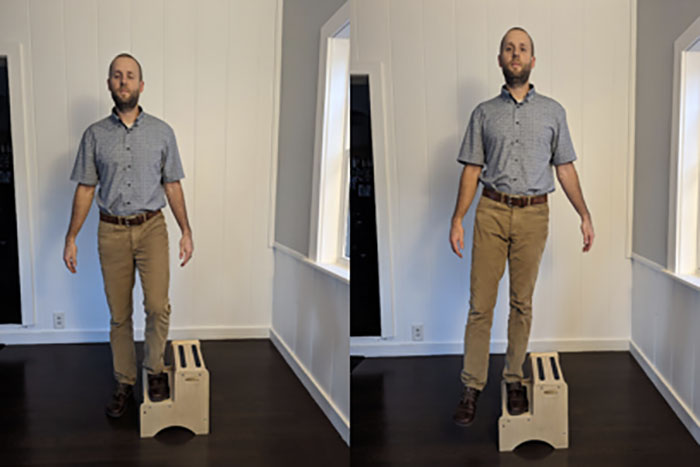
Stand next to a step, making sure you have something near to steady yourself using a hand. Place your foot on the step and shift your weight over to this leg. Slowly step upward, keeping your weight on this leg until you are standing tall and on one foot. Slowly lower your opposite foot down toward the ground, lowering yourself with the leg on the step. If painful from a standard step, lower the height so that it is tolerable for 10-15 reps (example: use a 4 or 2 inch block). As it gets easier over time, add height to the step.
Help with Chairs/Squatting:
Sit to Stand
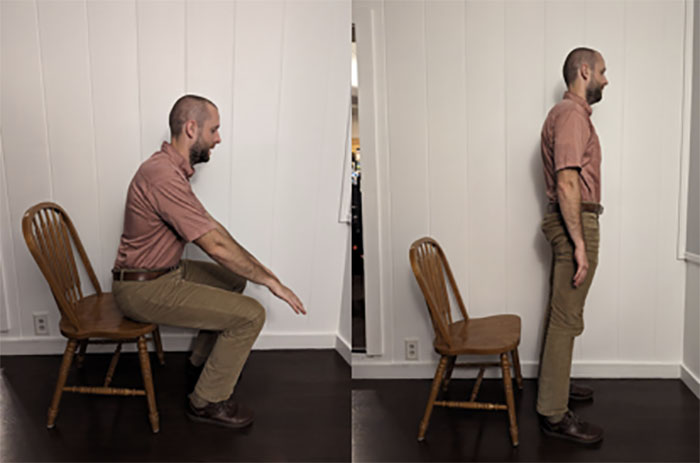
Sit at the edge of your chair. Position your heels so they are flat on the ground and slightly behind your knees. Bend forward and slowly drive yourself upwards until you are standing tall. Slowly sit back down, returning to your start position — trying to avoid any sudden drop. If painful from a standard height chair, raise the surface height with folded up towels until it is high enough that it is tolerable for 10-15 reps. As it gets easier over time, take away the towels.
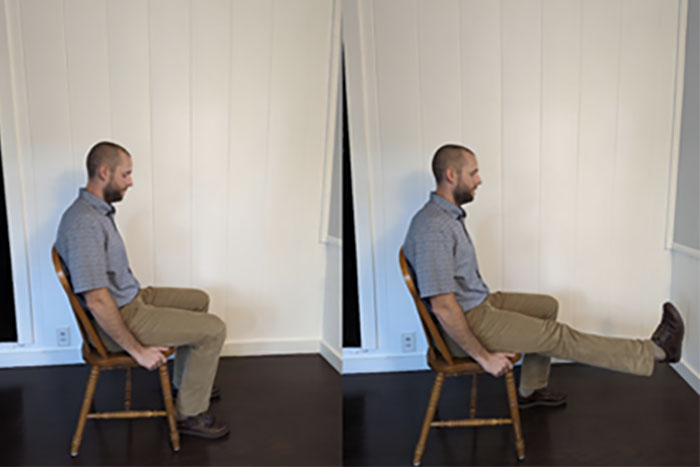
Help with First Steps after Sitting: Long Arc Quad
Stiff/sore knees after sitting for a while? Try this exercise! Before getting up, straighten your leg, holding in an extended position for 2-3 seconds before coming back to your start position. Repeat this 5-10x before getting up and moving. This exercise will loosen up your knee after being bent for a prolonged period of time. It will also serve to essentially lubricate the cartilage of your knee so it is more ready to bear weight as you stand and walk.
Use Your End-of-Year Benefits for Physical Therapy!
As the year comes to a close, now is the perfect time to take advantage of your health benefits! If you’ve met your deductible, don’t let those valuable benefits go to waste. Physical therapy can help you manage pain, recover from injuries, and improve your overall well-being.
Whether you’re dealing with arthritis, recovering from surgery, or simply looking to enhance your mobility, our team is here to support you. Schedule your sessions now to maximize your benefits before the new year begins.
Act now — don’t lose out on the care you need! Contact us today to book your appointments and ensure you make the most of your health plan. Your journey to better health starts now!

Honey Garlic Shrimp
This saucy shrimp owes a lot of its flavor to a bold marinade of honey, soy sauce, and garlic, which is music to everyone’s taste buds. For a little extra flavor, we add some minced fresh ginger, but that’s entirely optional.
Whisk the honey, soy sauce, garlic, and ginger (if using) together in a medium bowl. Place shrimp in a large zipped-top bag or tupperware. Pour 1/2 of the marinade mixture on top, give it all a shake or stir, then allow shrimp to marinate in the refrigerator for 15 min or for up to 8-12 hours. Cover and refrigerate the rest of the marinade for the next step. Heat olive oil in a skillet over medium-high heat. Place shrimp in the skillet. Discard used marinade. Cook shrimp on one side until pink — about 45 seconds — then flip shrimp over. Pour in remaining marinade and cook it all until shrimp is cooked through, about 1 min more. Serve shrimp with cooked marinade sauce and a garnish of green onion. The sauce is excellent on brown rice and steamed veggies on the side.
- 1/3 cup honey
- 1/4 cup soy sauce (reduced sodium)
- 1 tbsp minced garlic
- Optional: 1 tsp minced ginger
- 1 lb medium uncooked shrimp, peeled & deveined
- 2 tsp olive oil
- Optional: chopped green onion garnish
Let’s Get You Better ASAP!
Don’t let pain dictate your life. Take the first step towards reclaiming your mobility and well-being with our expert support. Start your journey to a healthier you today.