

WHAT IS YOUR GOAL:
TO BE CURED OR TO BE HEALED?
By Vincent Hanneken, PT/Owner
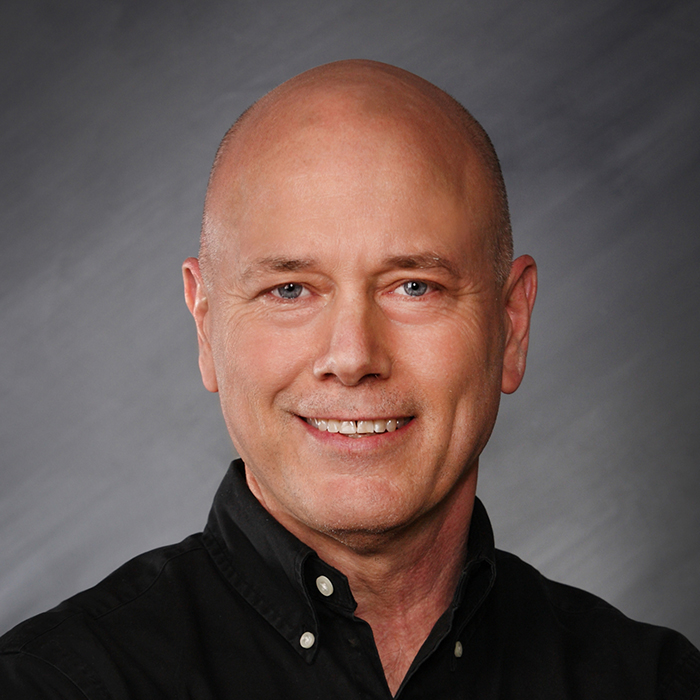
Vincent Hanneken, PT/Owner
As we begin a new year, the one common focus for many is to improve or maintain their health. This is more true as we hit certain decades where we begin to feel our health is not as resilient as in the past and so we start to have more attention on some area of our body. As many of you may know, body problems can begin insidiously or slowly and linger indefinitely.
Body pains and their resultant limitations that begin with a slow onset often have their origins in losing the strength and the control needed to deal with one’s daily demands. The body then has to compensate, which is often where pain and limitation enter the picture. An awareness sets in that we cannot take our bodies for granted like we have in the past and there is a need to invest. The new year is often a time where we decide to face some condition and decide to take action. There are many ways to invest, we have choices in various medications, injections, massage, chiropractic, and of course, physical therapy.
As it relates to investment, there was an article in a local paper a while back written by Abraham Verghese, MD entitled “The Difference between Healing and Curing” that poses an interesting perspective. In that article he writes: “Curing looks at the disease (arthritis, sciatica, back pain, or balance problems) a person has; healing looks at the person who has the disease.”

“Cure combats sickness, where healing fosters wellness. Cure depends on dispassionate skill; healing depends on compassionate care. Tests, medication and machines might be able to cure an illness, but without the human component — including touch, active listening, and total attention — the patient will not be healed.”
Healing is often a journey with much to learn and, by design, incorporates the patient’s involvement. In the end the patient feels more in control of their body, more educated and more in relationship with it. A cure intervention may be needed depending on the damage, but ultimately, healing will be what brings the body back into wholeness. A good argument could be made that of all the areas to invest our understanding, having a foundational knowledge of how to help our body keep its key abilities optimal over time is a worthy goal. We only have one body, we have many cars, lawn mowers and computers. Valuing such an understanding can keep our priorities straight.
In many respects, healing and physical therapy at Full Potential have much in common, as the process is heavily invested with a therapist’s personal 1:1 attention. What could be more in line with healing than on your first day of care, getting a full evaluation where your doctor gets to know you as a person, hears your story about what brought you to physical therapy, listens to how your problem started, what you think is wrong, and what you have tried. Healing begins with communication and your involvement in helping us understand you. You are not just a shoulder, knee, back, or neck, but a person whose life is on hold to some degree because of pain and limitation.
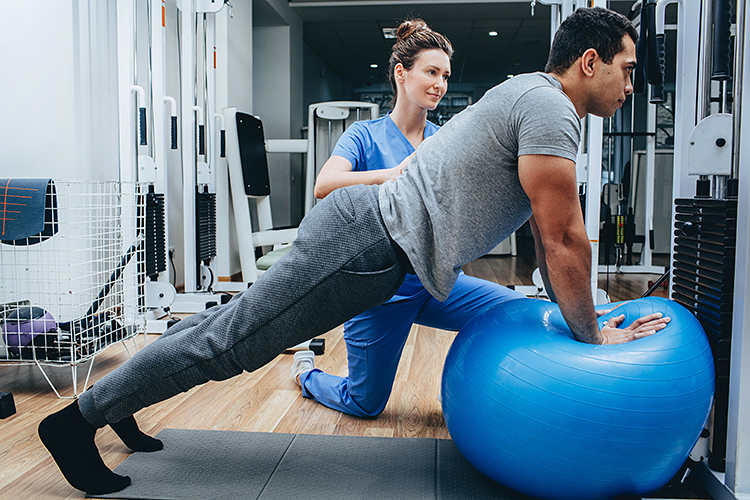
Your pain or problem is not who you are, and yet, when pain dominates your day and takes over your life, one can start to feel it is now a part of you.
One moves out of such an overwhelming feeling by having a caregiver who has their full attention not just on your pain, but on you as a person along with your goals and responsibilities. We, at Full Potential PT, have deliberately set up our care model to be able to invest our full attention in you and your recovery.
When your treatment starts the use of machines, taping, or other equipment may be needed to help calm pain and spasm, however, more important is the hands-on touch, education, and home instruction which will be key to improving your function and getting your “life” back. Knowledge is power and this can be no truer than for the care of the human body.
The more you understand, the easier it is for you to see your role in the process. Physical Therapists are experts at “nudging” the process along in the right direction. They then become your best coach, guide, and cheerleader. Many times we must be your confidence until you are feeling whole enough to be confident in yourself and in your physical abilities.
Dr. Verghese says, “…healing leaves behind a sense of accomplishment and empowerment. From many years in the business, this is so true because you are invested in the journey; your time, effort, will power and financial commitment are key ingredients to bring you back to your full potential.”
Dr. Verghese goes on to say “…we need to move our health care system closer to the healing system to improve the patient’s life quality, even if we are unable to cure their disease.” As you make your decisions on how to invest in your goal of better health, keep in mind the important differences between healing and curing. And, I am sure from other experiences where you were part of the difference in the outcome, that at the end of the journey, you felt more empowered and prouder of your accomplishment.
As a validation of this mindset, our success story this month touches on the very idea of healing v. curing. This patient had surgery for his back which was the cure, but the healing began three years later when he finally went through a thorough program of PT at Full Potential. A program where his investment and ours joined to create a great improvement in his quality of life.
2025 is just getting started, I encourage you to do an inventory of your body’s limitations and pains. When it comes to complex systems, the sooner one handles the problem the better the chance of achieving a satisfactory recovery; delay often encourages more complexity. Remember, healing is about attitude, participation, and believing that you will be better, and that is what Full Potential is about as well. Together we can make good things happen.
Decide to take action, we have several ways to get started – you can talk to your doctor and get a referral, or if you’re not sure what to do, we have phone and in office consults which can help us see if PT is right for you. Just call us and we will set you up for success.
Call us at 616-537-2864!


Thanks for Making Us a Top 5 Finalist!
The first round of the Community’s Choice Awards wrapped up in December, and we’re happy to announce that YOUR nominations have landed us in the top 5 candidates for “Best Physical Therapy Clinic”!
Thank you so much to all of you who took the time to nominate us in the month of December. It’s a great feeling to know that we have impacted the Holland community by helping them with their physical problems over the past 29 years.
The nomination round is the first half of the contest, and now that we are officially in the top 5, we’re hoping we can count on your support to vote us as Holland’s “Best Physical Therapy Clinic” in round two. Stay tuned for information on how to vote in the next round, and thank you again!
The Hidden Reasons Behind Low Back Pain
It is no secret that lower back pain (LBP) can change the course of someone’s life. The success story in this newsletter is an example of someone who, even after surgery, found their life increasingly focused on pain, and was less and less able to be active. Like the topic of our main article, physical therapy at Full Potential was found to be a healing solution to a frustrating problem.
Low back pain is common and it is no surprise that this area frequently gets into trouble! The low back works hard and often manages difficult postures and lifting throughout life. The most frequently involved segments are the lowest ones in the spine, L4/L5 and L5/S1. Of those who deal with ongoing back pain, some will require surgery, and nearly 80% of the surgeries on the lower back will be on these two lowest segments.
A back pain patient who needs surgery due to a nerve being pinched from a disk or bony tissue may have some misconceptions about what surgery is doing. Surgery removes or corrects the reason for the compression on the nerve, it usually relieves pain and leaves many with the impression that their back pain has been “fixed.” However, surgery alone, for many people, does not address why there was extra stress on the back or how the extra stress over time led to the eventual breakdown.
Why Is the Low Back So Vulnerable To Breakdown and Pain?
To answer that question, it is helpful to look at our joints. In our body, joints have unique designs that isolate motion to specific directions. The lower back vertebrae are designed to handle motion in the forward/backward and side bending directions but are not as well designed for rotation or twisting. This design helps protect the disk between the vertebrae which has limited twisting ability.
Yet, guess what motion is used excessively in the lower back? Correct, it is rotation, as rotation is a natural part of our daily tasks and is huge with sports. However, excessive rotation can contribute to making the lower back age faster (just ask Tiger Woods). The good news is there are two simple solutions to help someone move out of a chronic LB condition or avoid one altogether.
The first solution is to return the job of rotation to the area of the body designed to handle it. There is a lot of truth to the idea the body was built right but we just use it wrong and a good example of that is with the premature aging of the LB due to excessive long-term rotation. What area is built to fulfill the need for rotation? The answer is our hips. The hips are a ball/socket system that allows for an infinite variety of motions related to rotation, side bending, and flexion/extension. It is a universal joint for mobility!
Unfortunately, the hips are prone to getting tight and losing their range of motion (ROM). Loss in ROM affects common activities like walking, bending, and twisting. It is not uncommon to see someone walking with tight hips which forces excessive twisting into the lower back and literally puts a grinding motion on the LB joints and disks with each step. These people are set up for premature aging of their spine!
How Do We Usually Handle Low Back Pain Early On?
One common treatment of LBP is anti-inflammatories which do a fine job in handling the stiffness and pain in the LB in the beginning, but it does nothing to address why the LB is under additional stress. It is a simple “solution” to reach for Ibuprofen or Advil, but as LBP is continually treated with these medications, they lose their effectiveness and a stronger intervention like a steroid or spinal injection may be needed. These stronger medications still do not address the excessive rotational and frictional forces on the LB so premature aging of the spine is given an ongoing green light.
What Can Be Done About Low Back Pain?
Using physical therapy in a timely manner is where premature aging can be interrupted. Physical therapy addresses the restrictions in the hip, pelvis, and back and teaches how to exercise correctly to reduce excessive stress contributing to premature spinal aging. The last key ingredient in resolving LBP is being educated on the ergonomics of positioning, moving, and lifting to save the back from excessive daily stress. Reversing bad habits that are started early in life is key to a good preventative program. Ignorance is not bliss when it comes to the body.
It is important to realize we have an epidemic of LB and chronic musculoskeletal disorders in our country. Part of the reason for this is the over-reliance on drugs which gives the appearance of helping but delays addressing the true factors behind why a spine ages prematurely. If you have an ongoing LBP problem, there are probably associated restrictions in the pelvic and hip complex forcing excessive stress in the lower lumbar segments especially if surgery has been done and you are not back to enjoying life again. Quite often surgeons do not send their patients to physical therapy after surgery because they just want to relieve their pain, which is important, but addressing the “why” of premature spinal breakdown is crucial for long-term comfort and an active future.
Failed Back Surgery Syndrome (FBSS) is the name given to back surgery without ongoing success. Between 8-40% of post-surgical patients have significant issues after surgery and part of that reason can be due to not addressing the full picture.* You may have needed the surgery due to the level of damage, and you may need to use medication along your journey of having back pain. However, not addressing the mechanical reasons for spinal breakdown as early as possible is potentially setting one up for premature spinal aging and/or a chronic pain condition. The unfortunate fact of this situation is it is all too common but can be helped if people in these situations recognize how important it is to address the reasons why the spine is breaking down.
In light of this information do you have questions about your back pain or another area in pain? Then please give our office a call. We can set up a consultation and help you weigh your options. Sometimes the worst thing to do, especially with body problems, is nothing.
To Feeling your Best,
Vincent Hanneken, PT/Owner
*https://www.pennmedicine.org/updates/blogs/neuroscience-blog/2018/september/failed-back-surgery-syndrome#:~:text=And%20for%20some%2C%20surgery%20may,Back%20Surgery%20Syndrome%20(FBSS).
Back Pain? Take This Quick Test!
It can be easy to ignore the effects pain is having on your daily life. If you’ve got back pain, go through this list below and check off any statements that are true. How does your back pain score?
Because of the pain in my back…
✔ I stay at home
✔ I have to change positions frequently to try and get comfortable
✔ I walk more slowly than usual
✔ I don’t do the jobs around the house that I usually do
✔ I have to (or opt to) use a handrail to get upstairs
✔ I lie down to rest more often than usual
✔ I have to hold on to something to get out of a reclining chair
✔ I have to ask for help
✔ It takes me longer to get dressed
✔ I can only stand up for short periods of time
✔ I try to avoid bending or kneeling down
✔ It is difficult to get out of a chair
✔ It is hard to turn over in bed
✔ I sit for most of the day
✔ I avoid heavy jobs or lifting
✔ I become irritable or bad-tempered
✔ I have a hard time putting on my socks or shoes
✔ I only walk a short distance
✔ I sleep less or have worse sleep quality than before
Ok, there is a little bit of a catch… if you checked any of these items off, it’s worth bringing up to a doctor or physical therapist! Especially if you answered that your back pain is affecting how you sleep, your ability to get dressed, the distance you can walk, or your mood — those indicate that your pain is highly interruptive.
At Full Potential, we want to assist you in overcoming your limitations. Catching your symptoms early can make a huge difference in resolving the issue. If you check any of these boxes, give us a call!

The Cure: Back Surgery
The Healing: A Comprehensive PT Program
“As a result of physical therapy, I am able to move naturally and easily for the first time in 3 years. I got my flexibility very close to what it was before surgery, and it’s only getting better each day. The level of care and understanding [my providers] took with my physical therapy was a clinic strength. They listened to all the feedback I gave from start to finish. The experience and knowledge they have is a real testament to my success.”
—Ryan G.


Feel Better by Eating Better!
Anti-Inflammatory Ginger & Turmeric Carrot Soup
This delicious ginger and turmeric carrot soup is as comforting as it is healing. Packed with strong flavors like garlic, fennel, and ginger, and full of anti-inflammatory ingredients, this is the perfect winter soup.
Directions: Heat the olive oil in a large dutch oven or saucepan. Add the fennel, leeks, carrots, and squash. Sauté for 3-5 minutes until the veggies start to soften. Add the garlic, ginger, turmeric, salt, and pepper, and sauté for a few more minutes. Add the broth and coconut milk. Bring the mixture to a boil, cover, and simmer for 20 minutes. Once the soup is cooked, add it to a blender and blend until creamy. You could also use an immersion blender. Taste and adjust the seasonings to your taste. Serve immediately with a dollop of coconut yogurt and enjoy!
https://www.simplyquinoa.com/anti-inflammatory-ginger-turmeric-carrot-soup
Ingredients
- 1 tablespoon olive oil
- 1 leek, cleaned and sliced
- 1 cup chopped fennel bulb (1 small head)
- 3 cups chopped carrots
- 1 cup chopped butternut squash (or more carrots)
- 2 garlic cloves, minced
- 1 tablespoon grated ginger (about a 2-inch piece)
- 1 tablespoon turmeric powder
- Salt & pepper to taste
- 3 cups low-sodium vegetable broth
- 1 can lite coconut milk (14.5 ounces)
Exercise of the Month
Standing Lumbar Self Traction
3 sets, 10 reps.
Start in a standing position. Find a table about waist height. Place your forearms on the table so that your wrists are facing away from you. Lean forward and make sure your weight is being held by your arms. Ease your lower back and slightly bend your knees. You should feel little to no weight in your legs.


Let’s Get You Better ASAP!
Don’t let pain dictate your life. Take the first step towards reclaiming your mobility and well-being with our expert support. Start your journey to a healthier you today.