
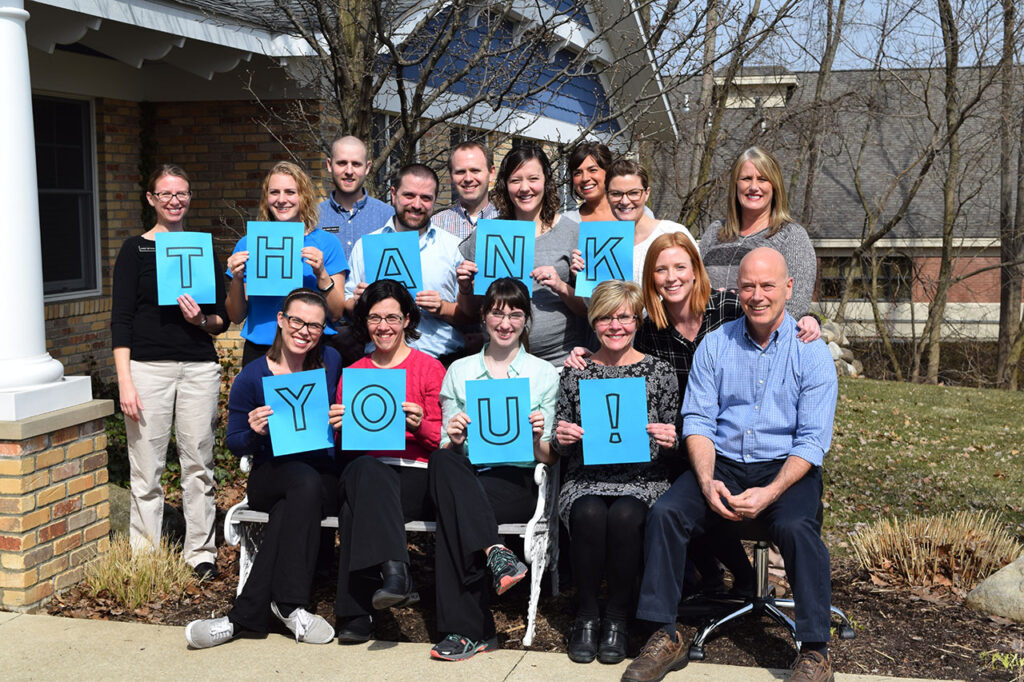
THANK YOU HOLLAND!

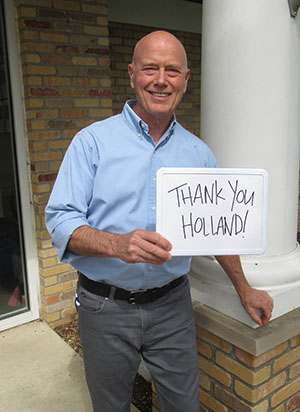
Once again, we are blown away by your support and your loyalty. Full Potential has been voted as “Holland’s Best Physical Therapy Clinic” for our NINTH consecutive year!
When Full Potential began (almost 30 years ago!), we had one goal: to assist our community in overcoming their physical limitations. We have continued to achieve this goal by providing expert individualized care and education to patients from Holland, Zeeland, and beyond. Physical therapy is more than our business, it is our purpose.
We are lucky to work where we see our purpose directly impact our patient’s lives, taking them from a place of pain or frustration to a place of confidence and capability. But to receive the title of “Best” is an especially encouraging look at the impact Full Potential has made in our hometown of Holland. Thank you to each of you who support our clinic, whether that be by participating in the “Community Choice Awards,” sharing our information to those in your circle with a need for PT, or by choosing us for your physical therapy. We look forward to many more years helping West Michigan!
To the best of Holland! Thank you once again.
Sincerely,
Full Potential Physical Therapy
Rethinking Your Home Exercise Program

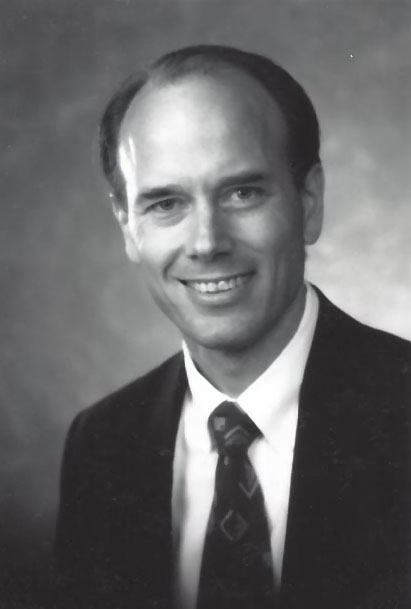
Vincent Hanneken, PT/Owner
By Vincent Hanneken, PT/Owner
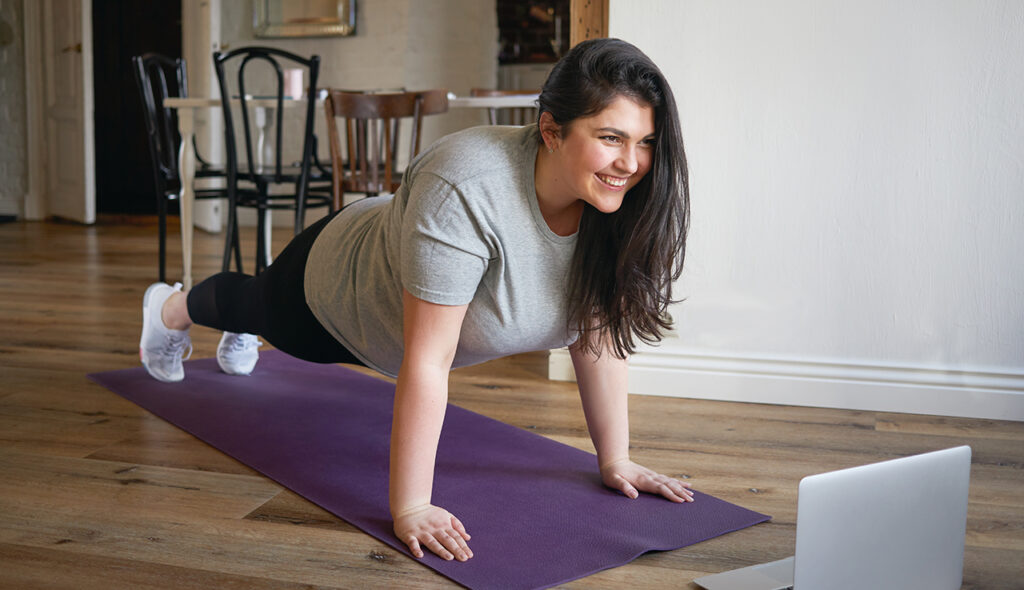
If you are receiving our newsletters then you or a family member are likely to have been a patient of ours in the past. During your therapy you received a series of exercises (Home Exercise Program or HEP) as part of the plan to assist in your progress. What I have observed with people who have needed orthopedic physical therapy is they often fall into one of three categories:
1. There was an acute injury
Car accident, fall, lifting injury, sprain and PT was needed.
2. Post-surgical
PT was needed after a surgery like a knee replacement or rotator cuff repair.
3. Just start having pain
And lastly, there are those who just start having pain and limitation for no specific reason and it is not going away with time, rest or medication.

In all three situations, the home exercise program likely played a vital role in your recovery. When someone needs PT, we can imagine it as if they are in a hole and they have to dig out of it to return to normal function and comfort. It is a great accomplishment to get back to feeling good and return to the activities you enjoy and need to do. Each person’s climb back up is unique and requires a specific program to achieve their goals.
As the home exercise program was part of the solution to get you out of the hole, once out and feeling better the exercises may now be seen to be less needed and so they start to fade away as pain and limitation become more of a distant memory. In all three categories, this is a likely occurrence once your function starts to feel more normal. Yet, is there more to consider when deciding when to wean from your program?
With how we heal from an acute injury or surgery, the rationale for ongoing HEP performance for categories one and two could be made to wean off the routine. The problem started due to a specific event and now you’re back to normal and perhaps no more investment of time and exercise for that particular problem is needed. However, for category number three, this situation is unique and further discussion is warranted.

From seeing my share of patients over the years, I would say category number three has provided the bulk of the people who have needed help in my career.
What I have observed is people tend to slide into an issue with their hip, lower back, neck or shoulder and do not really know what they did or why it does not heal and get back to normal with time and perhaps medication.
Unfortunately, they seem to be stuck and the enjoyment of life is interrupted.
I like to call these types of patients “lifestyle patients” as their problem was mostly generated from their daily routine or lifestyle and not from an event. Whether we realize it or not, the activities in a day are usually not balanced from the standpoint of how our muscles are challenged. Say, you like to walk four miles a day with a good pace, yet because there is some weakness in your key muscles for walking, or even that walking challenges some muscles more than their opposites, a compensative imbalance is created. What occurs then over time, could be months to years, is the imbalance grows and becomes significant enough that tightness/pain becomes a problem.
It is more the rule than not that we forget we are having our own individual daily battle with gravity.
The question is how efficiently we handle it when walking for exercise, charging up a flight of stairs, or lifting a grandchild. In other words, can it be done without compensation? What is compensation? Simply speaking, it is when our muscles and related joints have to work in a less optimal mode due to a key weakness or restriction in the movement system.
Unfortunately, these compensations are not easily discernable by the individual but when PT is needed due to pain and/or limitations, the therapist is able to identify the weak links and so address the deficits. Operating day to day without experiencing significant compensation is how we control the stresses on our “wear” zones. Our last newsletter discussed our “wear” zones which are places in our body that eventually need surgery due to excessive stress. (If you missed that article, it is on our website under Health Tips in March’s newsletter).

With a category three situation, once you have dug yourself out of your unique “hole” and are back to your usual lifestyle, can you see how you are now back doing those things that generated the imbalance in the first place? As an example, you make your living sitting at your desk/computer, often with less-than-optimal posture, and now you’re back to where your neck problem started — eight hours/day of desk work.
Here is where the home exercise program needs to be looked upon differently to help keep your interest and sustain its influence. This change in viewpoint is that it is now not a corrective program but a preventative one.
Pain and feeling limited are strong motivators to do something and so people often choose PT. However, when pain and limitation fade but the stressors of living are ongoing, here is where the preventative program continues to keep your body in balance so you do not regress as you and gravity are having their daily battle.
The HEP was set up to address your weakness and tightness tendencies, so finding a frequency of performing it would be strongly to your advantage to avoid regressing.
Maybe it’s only two times per week, or maybe only once per week done very thoroughly to never let the tightness regain its momentum. Staying connected to your program is key.
The aging process in our bodies is given less of a green light when we have a program of exercise and educational understanding that reverses our imbalances. We may be quite active with our job or even a walking program but don’t confuse general motion and activity with actions specific to reversing the effects of our gravity battle. Say you have a job that makes you look down all day, the preponderance of that head posture will eventually have its negative effect. So how do you reverse that effect to not sacrifice your body for your job or hobby? So much of where we can have our most powerful influence is in reversing our sustained postures and training the related muscles back to their proper length and strength. Joints are steered by muscle and when our muscle system performs efficiently, joint stress is reduced and actually performance is enhanced.
Finding a rhythm with doing a preventative home exercise program designed for you could be one of your best ways to avoid the common medical interventions waiting for many people as they hit retirement age. From observing thousands of patients over nearly 40 years, I can whole heartedly say, a custom preventative home exercise program could be one of the best investments in yourself.
In many respects, who you are doing your HEP for is not your present self but your future self. It is that person who would like to feel good tomorrow, next week, or five years from now, that person will thank you for your decision.

If you are a type three patient described earlier who is dealing with ongoing pain from a lifestyle issue, we are here to help you not only “dig out of the hole” but provide a program that can serve you for your future. A preventative exercise program is one of the best ways to stay ahead of your battles with gravity and keep your choices more open for enjoying your life. Seek out a referral from your doctor, or we do consults to help you understand how we can assist.
The worst thing you can do with a nagging problem is nothing, one step up from nothing is to give us a call and talk it over. Call 616.324.0353.
To health through prevention,
Vincent Hanneken, PT
Did You Know?
“Did you know? At Full Potential, our providers don’t just lend their expertise to getting our patients results! Our physical therapists will also put together detailed case studies to analyze the benefit physical therapy has had in resolving patient’s problems. These studies are a comprehensive overview of objective data, data collected right here in our clinic, and show the effectiveness of physical therapy in diagnoses ranging from head to toe (literally!).
The excerpt from a case study below shows some of the metrics used to measure how PT helped a patient with knee pain. If you find numbers and data like this interesting, take a look at the case study gallery on our website!
When you’re looking for a way to effectively manage your pain, injury, or rehabilitation, physical therapy has proven itself not just in immediate results, but to have an impact on your lifelong health. Call our office if you’re interested to know how PT could benefit you!”
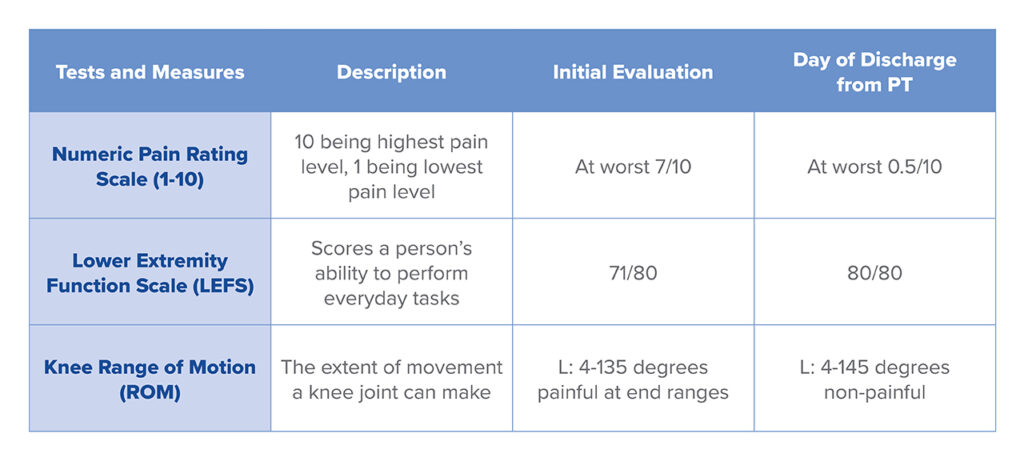
Summary: The patient was discharged from physical therapy after reporting 99% improvement since the start of therapy and meeting all goals, including improvement in ROM, decreased pain levels, improved functional reports, and strength measurements. She reports she has been participating in MVP classes without any issues, no longer limited by prolonged walking, and getting in/out of the car is no longer bothersome. She reports “99% of the day I do not notice any problem at all. Period.”
Call us at 616.324.0353!
DO YOU NEED A TUNE UP?

Getting back into action after a long winter full of snow like this one may be a challenge. It is amazing how much we can lose from a few months of being more sedentary! Even though snow is still on the ground, spring is not far off and nature will be calling you out to play and work. What could you do now? Well, consider a tune up at Full Potential. By addressing a problem in its infancy a quicker recovery can occur and you will not risk wasting valuable warm weather time by putting excessive stress on unprepared joints and muscles, potentially causing a strain on that first warm day. This is certainly not the way to start the warm weather season.
We are here to help you have a smooth transition back to an active lifestyle. Not sure if you need help? That’s easy – come in for a FREE CONSULTATION and we can talk, test to identify deficits and discuss what may be needed. We also offer consultations by phone, just call 616.324.0353.

Full Potential Reached!
“After my knee injury, I was unable to sit with my knee in any position without pain. Now I am deadlifting 70 lbs.! I am able to do more than I could prior to my fall. Full Potential helped my problem improve 100%. I enjoyed the fun atmosphere provided by the staff. We always found something to joke about during sessions. This made the more uncomfortable exercises much more enjoyable.”
—Jacklyn T.

.
Feel Better by Eating Better!
Mango Lassi Smoothie!
Bursting with flavor and protein, this mango lassi-inspired smoothie is your go-to fuel for a busy day. Made with sweet frozen mango, rich Greek-style yogurt, and nourishing hemp seeds, it’s a creamy, energizing blend that keeps you satisfied. Enjoy it as a quick breakfast, a post-workout pick-me-up, or a refreshing anytime snack.
Ingredients
- 1 pitted dried date
- 1 cup whole milk
- ¼ cup whole-milk plain strained (Greek-style) yogurt
- 1 cup frozen mango chunks
- ¼ teaspoon ground cardamom
- 1½ tablespoons hulled hemp seeds, divided
Place 1 date, 1 cup milk, ¼ cup yogurt, 1 cup frozen mango, ¼ teaspoon cardamom, and 1 tablespoon hemp seeds in a blender. Process until smooth, about 1 minute, stopping to scrape down sides as needed.
Pour the smoothie into a glass; top with the remaining ½ tablespoon hemp seeds.
Exercise of the Month
FIGURE 4 BRIDGE
Lie on your back with knees bent and feet flat. Cross one ankle over the opposite knee, forming a “4” shape. Press through the heel of the supporting foot and lift your hips, squeezing the glutes at the top.

Let’s Get You Better ASAP!
Don’t let pain dictate your life. Take the first step towards reclaiming your mobility and well-being with our expert support. Start your journey to a healthier you today.